
Walls Built to Hold Grade Long-Term
Retaining wall services in Prattville for sloped yards, eroding embankments, and failing walls that are no longer holding back soil
Segmental block walls that lean forward, backfill that's migrating downhill, and landscape beds that wash out after heavy rain are all signs of a retaining wall system that's no longer doing its job. Many Prattville properties with sloped rear yards or tiered landscaping rely on retaining walls that were installed without adequate drainage behind them — and when hydrostatic pressure builds up in saturated soil, even a structurally sound wall can begin to tilt, crack, or fail at the base. Premium Outdoor Renovations provides retaining wall services in Prattville that address both the structural and drainage components of wall installation and replacement.
Retaining wall work begins with an evaluation of the slope, the soil type behind the wall, the height of the grade being retained, and whether existing drainage is relieving or contributing to pressure against the wall face. Segmental block retaining walls are designed with compacted base material, battered courses for inward lean against the load, and gravel backfill with drain pipe to move water away from the retained soil mass. Without those components in place, even correctly installed block will eventually move.
Arrange an on-site assessment to evaluate your wall conditions and determine whether repair, replacement, or a new installation is the right approach for your site..
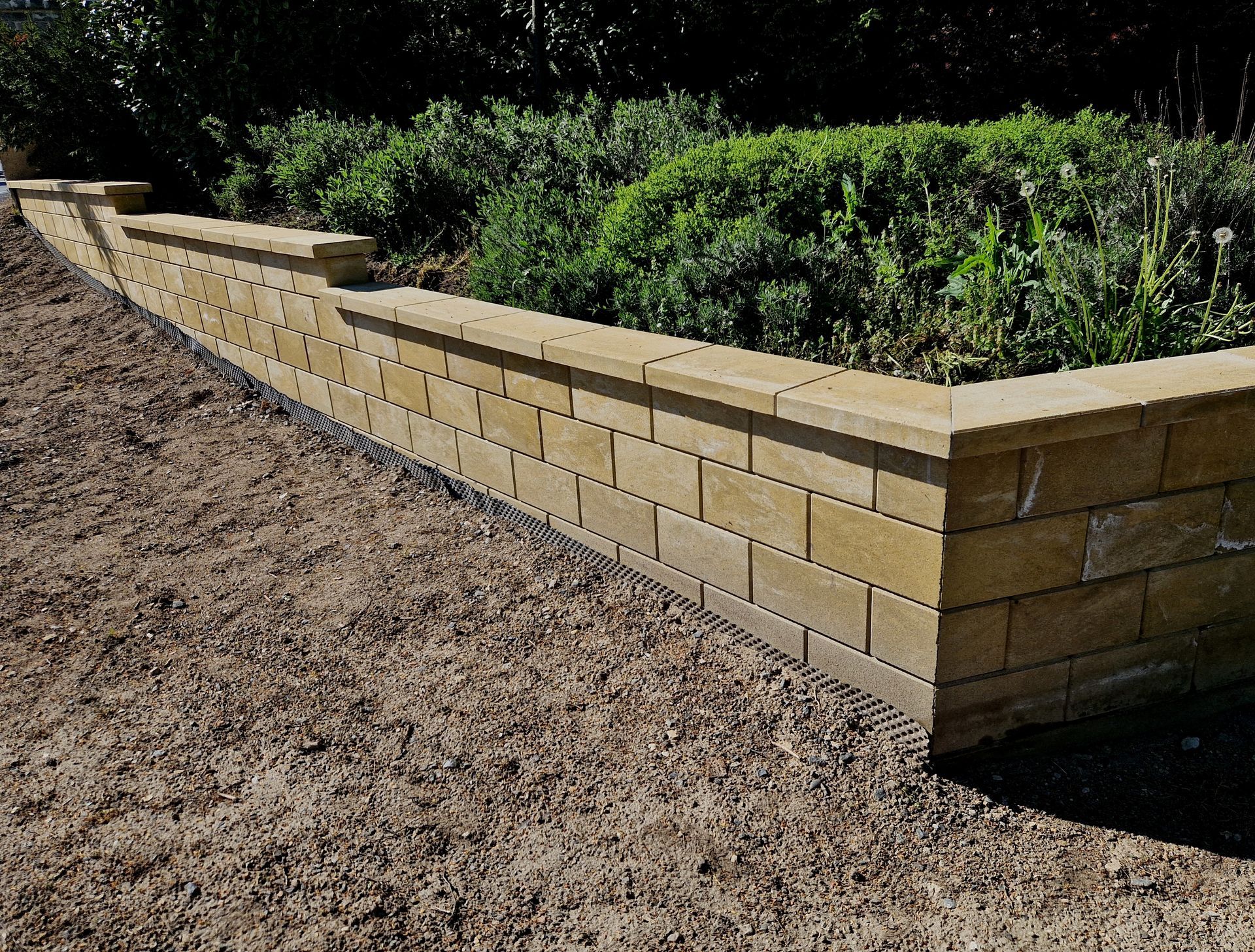
What Proper Retaining Wall Installation Requires
Premium Outdoor Renovations handles the full range of retaining wall work: segmental block retaining walls, retaining wall replacement, backyard retaining walls and yard leveling, landscape retaining walls, retaining wall drainage and erosion control, and complete retaining wall and landscape renovations. Each project type has different scope, but the underlying requirement is the same — the wall must be engineered for the load it's holding, the drainage behind it must be functional, and the base must be stable enough to prevent settlement over time. A landscape retaining wall that's only holding a single course of soil in a bed has different requirements than a backyard wall retaining four feet of grade, and the installation approach reflects that difference.
Once a retaining wall is correctly installed or replaced, the physical changes are clear: the grade behind the wall holds its position, turf and bed material above the wall stop washing downhill, and the face of the wall sits plumb or at its intended batter without visible lean. Yard leveling completed in conjunction with a retaining wall creates usable flat space in areas that were previously too sloped to function — converting a steep rear yard into a terraced, accessible area that can support turf, patio, or planting.
Retaining wall replacement projects require removing and disposing of the failed wall, re-evaluating and correcting the base, and addressing whatever drainage deficiency caused the original failure — otherwise a new wall installed on the same conditions will repeat the same outcome. For complete retaining wall and landscape renovations, all elements are sequenced so wall and drainage work is finished before landscape and planting begin.
Answers About How Retaining Wall Work Gets Done
Retaining walls involve structural, drainage, and grading decisions that aren't visible in the finished product — which makes it difficult to evaluate quality from appearance alone. The questions below address what the work actually involves and what to look for before and after installation on Prattville properties with sloped lots and tiered landscaping.
- What base preparation is required before segmental block is installed? The base course is set on compacted gravel — typically at least six inches deep — and the trench is dug below grade so the first course of block is partially buried, giving the wall a stable foundation that resists forward movement under load.
- Why does drainage behind a retaining wall matter as much as the wall itself? Saturated soil behind a wall weighs significantly more than dry soil and generates hydrostatic pressure against the wall face — gravel backfill and a perforated drain pipe installed behind the wall allow that water to exit rather than build up, which is what prevents wall movement over time.
- How do you identify whether an existing retaining wall can be repaired or needs full replacement? Walls with forward lean greater than one inch per foot of height, cracked or displaced base courses, or visible voids in the backfill typically require replacement rather than surface repair, because the structural failure is at the base or behind the wall rather than at the face.
- What does yard leveling in conjunction with a retaining wall actually involve? The existing slope is cut and filled to establish the new grade, the retaining wall holds the cut edge, and the fill material is compacted in lifts to prevent settlement — this sequence creates a stable, level surface above the wall rather than fill that continues to settle unevenly after the project is complete.
- How is erosion controlled at the base and ends of a retaining wall after installation? The ends of the wall are stepped back into the slope rather than terminating abruptly, and the base area is graded to direct runoff away from the wall face — both prevent water from cutting around the ends and undermining the base over time.
Premium Outdoor Renovations completes retaining wall installations, replacements, and full landscape renovations for Prattville homeowners across all lot types and grade conditions. Talk with Premium Outdoor Renovations about your specific site to identify the right wall system and drainage approach for your property.